Saturday, March 12, 2011

Keeping On


Bill and Jan Smolinski Continue To Fight For Legislation That Would Alter The Way Law Enforcement Officers Respond To The Report Of A Missing Adult. Slowly, and Against Strong Police Resistence, It Appears Progress Is Being Made

 State Rep. Vickie Nardello, left, talks with Jan and Bill Smolinski

   Jan and Bill Smolinski refuse to stop searching for the body of their son, Billy, who was murdered - and buried - in the lower Naugatuck Valley area six and half years ago. During their quest for truth the Smolinskis have clashed with local, state and federal police who have mishandled critical evidence and lost seven DNA samples in the case.

   Almost anything that could go wrong in an investigation, has gone wrong. The Smolinski’s experience with police has been a gauntlet of apathy, incompetence and rudeness. There have been a few caring officers who have tried to do the right thing, but the investigation is now too compromised to be easily solved. The main suspects are liars and drug addicts who view prison as a revoling door - they’re in, they’re out, they’re back in.

   The Smolinskis have been so outspoken, and credible, that the case has drawn intense media coverage which has included an hour long special on the Discovery ID channel that has been aired around the world. There has been so much attention on the case that Jan and Bill Smolinski have used the botched investigation to trigger local, state and federal reform in the way police officers investigate and handle reports of missing adults. 

   The Waterbury Police Department has changed the way it handles reports of missing adults, but the Police Chiefs Association in Connecticut has continued to oppose efforts by the Smolinskis to bring their training into the 21st Century.

   The impact of Billy Smolinskis murder has rippled through the halls of Congress, and triggered Billy’s Law, which unanimously passed the House of Represntaives last year before stalling in the Senate. Efforts to re-introduce the bill are underway this year.

   The following comments were made by Janice Smolinski during a public hearing at the state capital in mid-February. She was testifying before the Public Safety Committee.
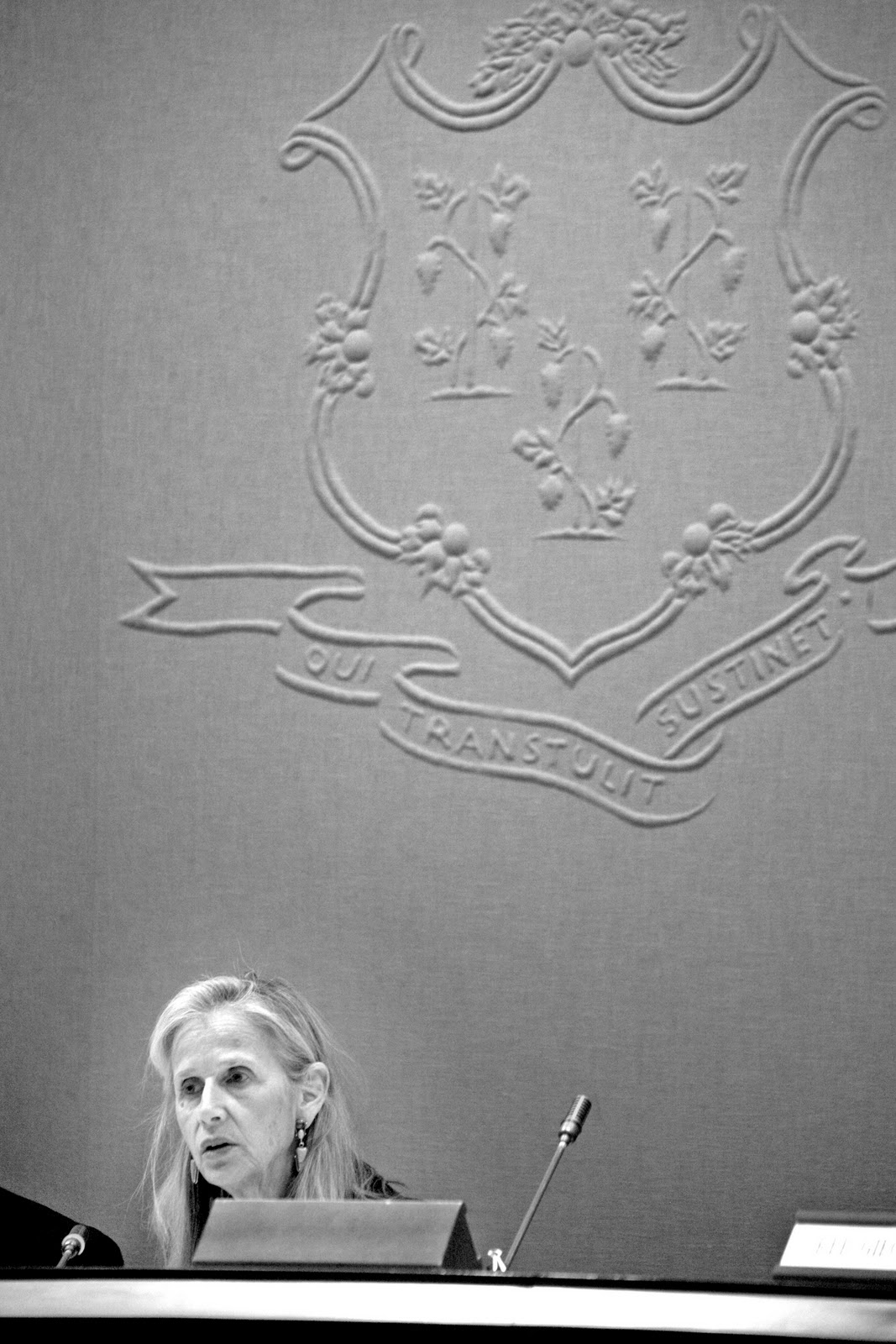
                                                                                 Joan Hartley, co-chair of the Public Safety Committee

     Good Afternoon. My name is Janice Smolinski and I’m here to testify in full support of Bill #6113, an act concerning the investigations into missing persons.

   Our family’s private Hell began six and half years ago when my 31-year-old son, Billy, vanished from his life.

   A sluggish response from the Waterbury Police Department – typical in the case of adult missing persons – started a domino affect that reverberates to this day. Impossibly strong leads were not followed, evidence was destroyed, seven DNA samples were lost, and basic information from Billy’s case was not entered into national data banks for three years.

   At the time of his disappearance Billy was involved in an explosive love triangle. This case involves a gravedigger, a long distance trucking company, a school bus driver, a politician, and a violent group of drug addicts.

   My son walked into a hornet’s nest.

                                                                                 Billy Smolinski and his best pal, Harley

   Law enforcement officers in the FBI, the Seymour Police Department, the Shelton Police Department and the Connecticut State Police have all told us Billy was murdered in August 2004, and buried somewhere in the lower Naugatuck Valley.

   Efforts to recover his body continue to this day.

   Despite overwhelming evidence of foul play, the Waterbury Police Department told a reporter that Billy was probably having a beer in Europe and would come home when he was ready. That comment was cruel and insensitive, and was uttered 18 months after Billy was murdered.

   Unable to get the Waterbury police to seriously investigate Billy’s disappearance, we hired private investigators, brought in private search dogs and began to piece the puzzle together ourselves. Our search for Billy brought us into the hornet’s nest in Woodbridge, where I was arrested for hanging a missing person poster of my son, and sued by Billy’s ex-girlfriend, Madeline Gleason.

   But our search revealed more than political and police corruption, we stumbled blindly into the world of the missing and unidentified dead. We learned that 160,000 other Americans are missing, and that coroners and medical examiners hold the remains of 40,000 unidentified dead. This is a national disaster.

   The president of the International Homicide Association, Bill Hagmaier, has publicly stated that a majority of the missing have been murdered, and are now the unidentified dead. The way to cross-reference these two groups is with DNA sampling. We live in a time when the most popular show in America is CSI, yet most of our local and state police lack basic working knowledge of DNA. They don’t know how to properly collect DNA or enter it into the proper databases, like NamUs.

     This can only change through training.

     There are hundreds of unsolved homicides in Connecticut and 700 missing persons, yet the police in Connecticut continue to oppose this legislation. Why?

   Four years ago West Hartford Police Chief James Strillacci, the head of the Police Chief’s Association, testified that legislation was unnecessary because there was no problem. Yet weeks later a missing 15-year-old girl was discovered hidden beneath the stairs of a home in a West Hartford, Chief Strillacci’s town.

   Two years ago Chief Strillaci again opposed efforts to reform the way law enforcement officers respond to the report of a missing adult. Shockingly, Chief Strillacci told Channel 3 news that he “wasn’t going to risk live people to find a body.”

   Chief Strillacci’s statements are insensitive and outrageous, and provide further proof why the Connecticut State Legislature needs to take a bold stand to protect the safety of our citizens.

   One hundred and fifty years ago the great black abolitionist Frederick Douglas said, “Power concedes nothing without a demand.”

   The police in Connecticut have the power now, and despite irrefutable evidence; they refuse to acknowledge they have substandard training in DNA collection, the usage of national data banks, and how they respond to a report of a missing adult.

    Bill #6113 will change that.

   We can no longer allow the police to obstruct efforts to improve their training. It is time for law enforcement to catch up to the remarkable advancements of science. Passing Bill #6113 will make Connecticut a safer place to live. Although this legislation will not help my son Billy, it will help the thousands of families that will experience the nightmare of a missing loved one in the decades to come.

   And for them, and for the safety of all our citizens, the legislators of Connecticut must demand this change.                  


The River


 It was the best day the Naugtauck River has experienced in 100 years. The river received so much attention on February 24th that one could imagine her embarrassed, and blushing red for old time sake. This blush, however, was triggered by admirers gushing at her beauty, not from the red dyes that were pumped into her as industrial waste into a glorified toilet.


     Times have changed, and two events on February 24th showcased the shift.

   First, a Naugatuck River Forum was staged inside the Mattatuck Museum that brought together developers, businessmen, political leaders, community activists, environmentalists and state and federal officials to discuss the future of the 39 mile long river.

   It was an historic gathering, and the enthusiasm in the room bodes well for a river that has been abused, neglected and poisoned. If the river were human, the communities up and down the Naugatuck River would be in prison for murder.

   This generation has a chance at redemption, and the gathering in the Mattatuck Museum signaled a collective will to seize that opportunity.

   Hours after the river forum concluded, a small gathering took place inside the newly renovated Aldermanic chambers in downtown Waterbury that re enforced just how far the river has come. It was the monthly meeting of the Waterbury Greenway Committee and it was announced that a New York based company had been selected to design and oversee construction of the first phase of a 7.1 mile greenway project in the South End of Waterbury.

   The company, RBA, has successfully completed the Brooklyn Greenway, the Manhattan Waterfront project, and the Hudson River Greenway. They have a world class track record of designing greenways, and the news electrified members of the Waterbury committee. After years of planning and routing studies, the greenway in Waterbury is one step closer to reality.

   Ann Burton started the day off by addressing the 150 attendees of the Naugatuck River Forum with a short and eloquent talk.

   “The Naugatuck River has made the valley what it is,” Burton said. “It has given life to settlements, farms and factories. The river has created great prosperity for us and for the whole country.”


   Burton is a member of the steering committee that planned the forum, and is heavily involved in an environmental committee of the Connecticut Community Foundation, which co-hosted the event with Rivers Alliance of CT.

   “The Naugatuck River has given us life,” Burton said, “and we’ve drained the life from it.”

   Burton went on to describe the efforts of environmentalists to restore vitality to the river and said there is now, “life and animals back in the river. We are in the early stages of recovery, and we are gathered here today to find ways to work together to restore the Naugatuck River.”

  Congressman Chris Murphy called the gathering a “who’s who of the past, present and future of the Naugatuck River.” Murphy went on to describe the damage inflicted on the river “a testament to what man can do to a river with dyes and toxins”, and the forum was “a testament to what man can do to undo that damage.”

   Before the forum considered development and environmental issues, Laura Wildman, of Princeton Hydro, gave a concise and devastating history of the river. She described the Naugatuck River as an industrial sewer that changed colors every day, and was so toxic at one point that “the river caught on fire.”


   From that horror Wildman now sees a river that will support wildlife, fish, inner tubing and kayaking. ‘We turned our backs to the Naugatuck River for 200 years,” she said. “Now we are turning and facing towards it.”

   The recreational opportunities are exploding. An annual canoe and kayak race draws hundreds of thrill seekers to the river every Spring. Sport fisherman are catching brood stock salmon, and when a fish by-pass is completed this summer at the Tingue Dam in Seymour, ocean going fish like Striped Bass will return.


   Bird watching is getting richer and more rewarding by the month. Three Bald Eagles spent a portion of the winter fishing along the Naugatuck-Waterbury town line, and Wood Ducks, Great Blue Heron and Egrets are now commonly spotted.


   One of the most listened to speakers at the forum was Dan Esty, an environmental professor at Yale University, and Governor Dannel Malloy’s pick to head the newly formed Department of Energy and Environmental Protection. Esty is also the co-author of Green to Gold, a book that explores the success modern companies can have by incorporating environmental thinking into their core business strategies.

   Esty, who has not been confirmed yet for his state post, provided keen insight into the thinking of the new Malloy Administration. “Our mission is to help generate jobs,” Esty said. “We need innovation to do things different and better.”

   Esty grew up in Watertown and said the success of the Naugatuck River “is personal” to him. Esty applauded the cooperative spirit at the forum and said collaboration is key to any project receiving funding. “It’s important to look at the issues with a holistic lens,” he said, “and partnerships are critically important.”

     The past thinking in Connecticut was that anything environmental was anti-business, and anything business was anti-environmental.

   “We need to change that thinking because business and the environment do not have to be mutually exclusive,” Esty said. “It is our job to change the spirit, and it begins with answering questions.”

   Sustainable development along the river was explored during a panel discussion that included Alex Conroy, the mastermind behind the successful river development project in downtown Providence. The panel was led by Gary O’Connor, the chairman of the Waterbury Chamber of Commerce.


   “Our ancestors failed to understand the need for economic balance with the environment,” O’Connor said. “Their efforts were not sustainable.”

  The goal of sustainable development now is to find a balance with the enhanced environment to generate economic growth. “Our political leaders need to think about the total watershed,” O’Connor said. “We can no longer think about borders and boundaries. Nature doesn’t work this way.”

    O’Connor’s comment touched on the most provactive theme of the Naugatuck River Forum - how do the diverse stakeholders along the river cobble together to view the river in a holistic way? How do we make regional decisons about the health and vitality of our most precious resource?

   Ideas are being explored to create a Naugatuck River website, and to consider the formation of a regional council, or association, that might govern the river. There are obstacles and special interests to overcome, but the river itself may provide the answer. The greatest asset of the Naugatuck River is it’s power to erode the barriers that have fragmented the communities along its 39 mile stretch. Water can carve through rock, and if the Naugatuck River is to fulfill the astonishing promise that lays ahead, it’s clear, strong currents must erode the human barriers that divide us.


Saturday, January 22, 2011

The Triangle

Marriages crash, couples fight, and the divorce rate in America remains at staggering heights. When the fog lifts there is usually an aggrieved ex-spouse harboring thoughts of vengeance. This is not news.

But the marriage of Ron and Cheryl Tompkins is not your typical love story gone south. It involves a cop and a federal lawsuit alleging an abuse of power by a prominent state prosecutor.

Ron and Cheryl were married for 18 years, had two children, and lived in a beautiful house in Wolcott. It’s impossible to determine the exact date the marriage began to unravel, but April 2008 was clearly significant - it was the time Cheryl asked Ron to move out of their house. She told him she wanted a divorce.

Ron, a Waterbury police officer, was stunned. He wasn’t going to pack his bags and leave. He wanted to talk about it, seek professional counselling, and see if they could save their marriage. But day after day, Ron said, Cheryl kept asking him to leave.

Stubborn, and with no where to go, Ron refused.

The Search


Billy Smolinski was murdered six years ago. The effort to crack the case involves local, state and federal police. The Smolinski Family is now working closely with private investigator Todd Lovejoy, pictured above, tracking down leads.

By John Murray

Six years is a long time to hold your breath.

But that’s exactly what Bill and Jan Smolinski have been doing since their 31-year-old son Billy vanished from his life on August 24th, 2004. When Billy disappeared from Waterbury the Smolinskis immediately knew something was wrong, they just didn’t know how horribly wrong until the days and weeks blurred into six years of hell. They quickly discovered that Billy was involved in an explosive love triangle at the time of his disappearance. And they now know that Billy is never coming home alive. Several suspects in the case have all confirmed that Billy was murdered that night and his body stashed beneath the rich farmlands and forests of the lower Naugatuck Valley.

The big question now is where?

The Storyteller


                                                    Lost Rights author David Howard 


   One day before Abraham Lincoln was murdered at the Ford Theater in Washington D.C., a soldier from the Union Army entered the statehouse in Raleigh, North Carolina, and swiped one of the 14 original copies of the Bill of Rights. Robert E. Lee had already surrendered to Ulysses S. Grant at Appomattox, but word traveled slow, and members of General Sherman’s army continued to plunder the South.

   At the end of the war the soldier returned to Ohio and sold the historic document for $5. The new owner was a young man, Charles Shotwell, from NYC, who eventually became a grain broker in Indianapolis.

   The document hung in his office for years before getting moved to his family home, where it remained for almost 100 years. When his daughter was moved to a nursing home the document followed her there, and upon her death, the third generation of the Shotwell family to possess the document decided to sell it.
In the 1990s two of Charles Shotwell’s granddaughters tried to sell the document for several million dollars, and eventually relinquished the prize for $200,000 to Woodbury antique dealer Wayne Pratt, and former Waterbury developer Bob Matthews. When the two men tried to flip the Bill of Rights for $5 million, they were snagged in an FBI sting. The stolen document was seized and returned to North Carolina.

                                                                   Wayne Pratt

   The astonishing 140-year-journey of the document is captured in riveting detail in “Lost Rights”, a book written by David Howard. The book has been called a “great beach read” by the New York Times, and has received glittering praise in reviews across the country. The book was released on July 2nd and Howard has been traveling through Philadelphia, Washington D.C. and North Carolina on a book tour. He is sweeping through Connecticut and the Northeast in the weeks and months ahead.

   Lost Rights is a terrific read for anyone interested in American history, antiques and the murky world of historic documents. The book is a must read for the residents of North Carolina, and of keen interest to the hundreds of thousands of people whose lives were touched by Wayne Pratt and Bob Matthews.
Pratt, now deceased, was one of the most influential antique dealers in America, and often appeared on TV as an appraiser on the Antique Road Show.

   Matthews was a brash, loud, name-dropping, social climber who lavished politicians with donations and made sure everybody in Waterbury knew who he was. He bought a lot of buildings, used a helicopter to arrive at an event at the Mattatuck Museum, and when the real estate market caved he slipped out of Waterbury leaving the banks holding the bag. Matthews reinvented himself in New Haven where he leveraged a state backed loan to purchase an office building for $2 million, and later flipped it for $20 million.

                                                   
                                                                   Bob Matthews

   In the 1980s Matthews handed Waterbury Mayor Joe Santopietro $25,000 in cash in a brown paper bag, and ten years later was a central figure in the impeachment inquiry into Governor John Rowland. Pratt described Matthews as a Houdini for his ability to escape trouble. Matthews avoided legal consequences for his bribe to Santopietro, his monetary gifts to Rowland, and for his involvement in attempting to sell a stolen copy of the Bill of Rights. Matthews now lives in West Palm Beach, Florida, and appears to be in financial trouble again.

   Lost Rights is an absorbing read, but to me the most interesting character in the project isn’t Pratt or Matthews, it’s the writer, Dave Howard. I have known Dave for more than 20 years. I met Dave when we both worked at the Register-Citizen newspaper in Torrington, CT. Dave had just graduated from college and had a trial assignment to cover a lottery winner. An anonymous call to the newsroom informed us that a Torrington resident had just won a multi-million dollar jackpot, and our job was to confirm this, and bag an interview. Dave was the reporter and I was the photographer.

                                           Howard working on his book at 4:30 am

   The individual answered the door with a phone pressed to his ear saying, “I didn’t win. Why is everybody calling me?”. One of his “friends” had triggered the rumor as a goof, and the news had swept across Torrington in hours. I fired off a few pictures and Dave stayed behind to work an angle that would impress the editors. An hour later the phone rang in the darkroom, It was Dave. He hemmed and hawed and then blurted out that he had locked his keys inside his truck. Dave didn’t want the editors to know, and asked if I could help him, He eventually got a tow truck driver to open his door, wrote the story, and landed the job.

   The locked-keys-inside-the-car-routine became a standing joke between us. We both repeatedly found ourselves locking keys inside our cars, losing wallets and generally misplacing all our valuables. Dave eventually left the newspaper in 1992 to travel across the country, and I left to launch The Waterbury Observer in 1993 with Marty Begnal.

   While Marty and I were struggling to sell ads and produce our first issue, Dave pitched in and wrote our front page introduction to the community. In the second issue of the Observer Dave wrote an in-depth article about spending election day shadowing independent candidate for mayor, Andy Michaud.
Dave then landed a paying job at the Torrington bureau of the Republican-American newspaper, and later transferred down to Waterbury where he covered the raucous 1995 mayoral battle between Mike Bergin, Philip Giordano and Jimmie Griffin. One year later Dave launched a freelance writing career and joined the Observer as an editor-at-large. He wrote one in-depth feature article per issue and cleaned up copy throughout the paper. This arrangement gave Dave the time needed to explore freelance assignments and he was soon writing for Connecticut Magazine and the New York Times.

   Dave’s stint at the Observer was extraordinary. We worked on massive projects documenting the history of the black community in Waterbury, explored the mysterious death of a homeless man and shared the story of Eileen Hosier and the 45 German Shepherd she housed inside her Lounsbury Street home. In “The Grip” we uncovered - big surprise - a direct link between politics and police in Waterbury.

   In 1997 we drove down to New Orleans to hurl ourselves into the riotous mix of Mardi Gras and Super Bowl, and nearly drummed the Observer out of business when I decided to run photographs of three topless women on Bourbon Street.

   But more significant than the stories and events we covered, Dave shared a farmhouse with me and my daughter Chelsea for almost two years. When you reduce life to it’s essence, what more powerful compliment can you give a man than to say your daughter and your dog love him.

   But soon a different kind of love swept into Dave’s life and he left the Observer to embark on a two month bike tour of Chile with his girlfriend, Ann. Afterwards, he followed his heart to NYC to live with Ann and continue his writing career. His first job was at Working Mother, followed by a stint at National Geographic Adventure Magazine. Dave continued to freelance and wrote a story for Travel and Leisure Magazine about an 80 mile hike we took through the jungles of Guatemala to interview archeologist Richard Hansen.

   In 2002 Dave and Ann were married in the Canadian Rockies and Chelsea and I traveled to Jasper, Alberta, to be the only witnesses of the ceremony. Two years later Dave and Ann had a beautiful baby boy and named him Vaughn. (He is the little red head sprinting in the picture above). Dave accepted a full-time position as an editor at Backpacker Magazine and the family settled in Emmaus, PA.

   Backpacker, Runner’s World, Bicycling and a host of other publications are owned by Rodale, and book publishing is one of the many components of the company. A former Rodale employee, Jeremy Katz, had left the company to become a literary agent and he was on the prowl for clients. Katz had read some of Dave’s articles and approached him to find out if he had any interest in writing a book. Of course he did, he said, but he wasn’t sure what the subject would be, or how to go about getting a book published. Jeremy brainstormed with Dave and they settled on the expansion of an article Dave had written for Connecticut Magazine about a stolen copy of the Bill of Rights.

   “Charlie Monagan, the editor at Connecticut Magazine, is the one who turned me on to the story,” Howard said. “I always knew there was a lot more to the subject, so with Jeremy’s help, I wrote a book proposal.”

   Katz took a few dozen copies of the proposal into NYC and delivered them to various publishing houses. Katz said if any of the editors wanted to meet Howard to discuss the book he would be in town for five days. Several editors brought Dave in for interviews and seven or eight publishing houses submitted a bid to publish Dave’s book. When the fog cleared, the winner of the book auction was Houghton-Mifflin, and Dave had one year to research and write the book.


   Dave used his journalism skills to investigate the story and travelled to North Carolina, Washington D.C., Ohio and Connecticut to probe for details. While in Waterbury Dave interviewed many of his old political contacts about their dealings with Bob Matthews, and sat down with Wayne Pratt several times in Woodbury to document his side of the story.

   The book was completed at about the same time the U.S. economy collapsed and the publication of Lost Rights was delayed for almost two years. Dave used the time wisely and re-worked the story several times to make the book tighter and cleaner. Now that it is out Lost Rights is making a splash. Dave was invited to address a gathering inside the National Constitution Center in Philadelphia, and has been interviewed by Colin McEnroe on WNPR, the Martha Stewart Show, Larry Rifkin on WATR, and a talk he gave in Washington D.C. was filmed and will appear on CNN’s Booktalk in the next few weeks,

   I’ve known Dave for 20 years and we have wild, loose and creative conversations that can last for 12 hours straight. But through all our talks I never asked him about the actual mechanics of writing and how he mastered the nuances of the English language. When Dave was at the Observer he would write a 3000 word story without using spell check and not one word would be misspelled. Me? Without spell check I would be doing manual labor. So how did he do it? I called him up one night and asked him to share the story of how he developed as a writer.

   “I always loved books and my Mom would read to us every night. Where The Wild Things Are made a huge impression on me, as did Dr. Suess and Curious George. I used to wait for the baby sitters with a pile of books in my hand.”

   Then in 3rd grade at Andover Elementary School Dave said a teacher, Dave Caron, made a colossal impact on his life. “I was always making up stories with the Story Starter program and Mr. Caron saw something special in what I was doing. He encouraged me to take out a book anytime I wanted and to write. A good teacher notices when a kid has a gift and they encourage them along. I was lucky to have had several great teachers along the way.”

   In 10th grade another teacher intervened to push Dave even harder. “His name was Mr. Canny and he’d tell us over and over again that the first draft of anything was vomit on a page. He’d say there was material there to work with, but it needed to be cleaned up. Then he’d tell us to clean it up again, and again, and again. A teacher saying this to you at that age made a big impression on me.”

   And obviously Dave Howard learned his writing lessons well.

   The first draft of Lost Rights was vomit on a page, but he cut 35,000 words, re-organized the structure of the story and cleaned it up over and over again.

   Just like Mr. Canny taught him. 

Wednesday, April 28, 2010

Vision Quest

Steve Schrag and WCLEAN Have Green Ideas For Anamet Site


Steve Schrag has spent his life as an organizer and activist fighting for positive change in the work place. For the past 30 years in Waterbury, however, Schrag has repeatedly found himself in opposition to major development projects.

He was against EWR in the 1980s.

He was against a super mall.

He was against building a casino in the South End.

He was against First Light building a generator in the South End.

He was against Chestnut Hill BioEnergy building a trash to energy plant at the old Anamet site.

While spearheading the community uprising against Chestnut Hill BioEnergy this past summer Schrag was repeatedly asked what ideas he had for the 17-acre brownfield lying on the east bank of the Naugatuck River. If not a trash to energy plant, what?

Saturday, February 27, 2010

The Full Monti

{The following profile was published in December 2009 in the Long Island Business News. It is a profile of Don Monti, who is the CEO of Renaissance Downtowns, who is looking to set up shop in Waterbury)

The Full Monti
by Ambrose Clancy
Published: December 4, 2009
Long Island Business News


Don Monti is in a hurry.

By his count, the development world has spent the last 60 years screwing things up, and now, somewhere north of 60 himself, he’s on a crusade to fix it all and fix it fast.

No more sprawling suburbs and the shopping meccas on which they feed. An end to the single-family, picket-fenced, ticky-tacky boxes in which post-war America boomed.

“That model isn’t broken, it’s shattered,” Monti said on the run, a favored form of communication. “We have to stop being afraid of the ‘u’ word and the ‘r’ word. Urban and rental. Get over it.”

The gospel according to Monti is smart growth – walkable, high-density downtowns with apartments above shops close to public transportation.

It means building up rather than horizontally, finding salvation by mixing the commercial with the residential. It also means encouraging galleries, boutiques and restaurants to set up shop; allowing spaces where culture can grow organically.

His passion and energy has won his company, Plainview’s Renaissance Downtowns, development deals in New Hampshire, Connecticut and here on the Island.

That same passion has won him admirers. An equal number can’t stand him.

Sunday, February 14, 2010

The Fire

Angry At A System They Trusted To Help Find Their Missing Son, Jan and Bill Smolinski Seek Federal Reform


Story and Photographs
By John Murray


Fire makes steel.

For Jan and Bill Smolinski a fire of angst and pain engulfed their lives after their 31 year old son Billy vanished six years ago. The fire is so hot it could shatter friendships and destroy their marriage, Left alone, the fire would consume them.

The Smolinskis chose to redirect the fire - the energy - to use it as a tool to reform the tattered system that betrayed them during their desperate search to find their son. When Billy disappeared in August 2004 the Smolinskis believed the local police would work hard to find Billy.

They were wrong.

Thursday, October 15, 2009

Q&A With John Theriault

Education and Economic Development Key To Independent Party Candidate John Theriault's Campaign


Interview By John Murray
Photographs By Michael Asaro


Observer: John, you seem like a nice guy. Why are you doing this to yourself?

Theriault: I am a nice guy and have a lot of respect from the community. I’ve been a lifelong resident of Waterbury and I’ve worked in the town for 32 years as a teacher and a principal. I want to give back to the town and the community what they gave to me. They gave me a good living all these years. As you develop your skills and hone your talents I think it’s time to give back. There are things going on in the city that I don’t like.

Observer: Like what? What’s the number one thing you don’t like?

Theriault: I see a mayor who is a full-time developer and a part-time mayor. I see some wheeling and dealing going on with NETCO/Synagro down in the sewer plant. I see the mayor building buildings outside the city and recruiting businesses out of Waterbury. This erodes our tax base.
I see people in Waterbury struggling with their taxes and unemployment and there is no economic development plan in place.

Observer: So you are frustrated?

Theriault. Yes. I want to be part of the solution to the problem, I don’t want to be the problem itself. I want to offer some initiatives. I want to expose the issues. I have no desire to ever attack the mayor on a personal or family basis. The mayor has a lot of issues regarding the operation of city government that have to be addressed.

Q&A With Michael Jarjura

Strong Financial Practice Centerpiece Of Incumbent Mayor Mike Jarjura's Re-election Campaign.


Interview By John Murray
Photographs By Michael Asaro


Observer: Let’s start off with the primary. Only 19% of the voters showed up, what’s up with that?

Jarjura: Well, you can look at it a couple of ways. Some people who wanted to be positive said the voters thought the mayor was doing a good job and basically stayed home because they were happy with the way things are going. The other way to look at it is general apathy. People are so involved in the economic crisis, the war in Afghanistan and the national debate about health care that they just aren’t focused in on local politics. Any way you look at it I think a 19% turnout is a disgrace.

Observer: I agree. In the 16 years I’ve had the Observer there are less and less voters every election. Everyday you pick up the Republican-American and look at the obituaries you see the people we are losing who were involved in the process.

Jarjura: We are not losing population but we are losing the involved community-minded people. We saw some districts in the primary where barely 5% of the voters showed up. One of the biggest voting districts by registration is at Maloney School and they had the smallest turnout.

Observer: That’s largely Hispanic isn’t it?

Jarjura: Yes, and we had a very poor turnout in the North End as well. The big turnout was Bunker Hill, Town Plot and the East End.

Observer: Historically the minority community has not participated in the voting process as much as the other ethnic populations in the city.

Jarjura: But they came out when they wanted. They came out for the Obama election so it shows they can come out if they want to.

Observer: If they are motivated..

Jarjura: How do we motivate them? We ran ads, we put up signs, we did phone calls and we had Hispanic candidates and African-American candidates on the ticket. What else can you do?

Saturday, September 26, 2009

Mind Of Steel

Derek Poundstone Uses Extraordinary Mental Toughness To Become Arguably The Strongest Man In The World.


Some might think that genetics and large muscles are the key to Derek Poundstone’s stunning rise to the title of America’s Strongest Man.

They would be wrong.

Sunday, August 23, 2009

Billy's Law

In her tireless effort to find her missing son, Billy, Janice Smolinski uncovered systemic problems with the country’s national data banks, and the way law enforcement officers collect and process DNA samples. Congressman Chris Murphy is introducing federal legislation to correct the problem, and has named it “Billy’s Law”.


Janice Smolinski, center, watched Connecticut Congressman Chris Murphy unveil plans to upgrade the national system of the Missing and Unidentified Dead at a press conference in Hartford, CT. The legislation is being named "Billy's Law" after Smolinski's 31 year old son, Billy, who vanished five years ago.


The first time missing persons advocate Janice Smolinski met with Congressman Chris Murphy two years ago she had a difficult time reading him. They had originally agreed to meet at a coffee shop in Cheshire, but Murphy had to reschedule, and they ended up meeting inside his office in New Britain.

The meeting lasted 45 minutes and Smolinski said she did most of the talking. She told Murphy about the 40,000 unidentified human remains being stored around the country. She told him about the 160,000 missing persons in America, and the difficulty using national data bases to try and connect DNA samples from the missing to the unidentified dead.

“I threw a lot of information at him and he didn’t say too much,” Smolinski said. “When I left the office I didn’t have a good feeling. It didn’t seem like he had grasped the enormity of what I was saying to him.”

Wednesday, June 24, 2009

Into The Woods

Billy Smolinski Vanished Five Years Ago. The Cops Believe His Body Is Buried in Shelton or Seymour. The Big Question Is Where?


Janice Smolinski watches as private investigator Todd Lovejoy searches through debris in a wooded area in Shelton.

Bands of electrical storms surged across Connecticut and heavy air hung oppressively across the lower Naugatuck Valley. It was a day to sit on the front porch and drink iced tea, not a day to stomp through the forest, scramble up embankments, and peer beneath rubbish looking for the body of your murdered son.

Welcome to the world of Janice and Bill Smolinski, which for the past five years has been a living nightmare as they relentlessly search for the remains of their 31-year-old son.

Thursday, May 14, 2009

Battle Lines

Plans To Transform Anamet To Clean BioFuel Generator Meets Public Resistence. Company Has Troublesome Past.


The Anamet site has been dormant for nearly a decade.


Saverio Romanelli of the Waterbury Environmental Control Commission questioned Chestnut Hill BioFuel during its March 2009 presentation.


Old equipment decaying inside Anamet


On the surface it sounds like a terrific idea.

Chestnut Hill BioEnergy is proposing to purchase the Anamet property on South Main Street in Waterbury and transform the shuttered buildings, which have lay dormant for 9 years, into a clean energy project. The gist of the proposal is to take up to 54 truckloads of food waste a day and transform it into electricity.

The company will knock down an abandoned building along the Naugatuck River which used to generate steam and electric power for Anamet, a massive company that made metal hoses in the south end of Waterbury for 72 years, and turn a Brownfield into a taxable business that will put money in city coffers.

The plant would employ 40 to 50 people and tax revenue from the property would increase at least ten times. Sounds great, huh? Well, as usual, the devil is in the details. And upon closer inspection, some of the details don’t smell so good.

A few years ago David Goodemote – the man driving the proposal in Waterbury - was the president of Eastern Organic Resources which ran the Woodhue Composting Center in Springfield, New Jersey. The business took in 100 tons of wood chips, food waste, brush, and cardboard a day, and transformed the stew into compost they would resell to landscapers, garden centers and contractors.


David Goodemote


Food waste compacter behind a local Stop and Shop

Goodemote proclaimed his company to be environmentally friendly, but his neighbors had a different story – they called the composting center an obnoxious and destructive force in the neighborhood. The neighbors complained about a foul odor coming from the composting plant, and one neighbor, George Nicholson, worried that the foul air from Eastern Organic Resources caused respiratory infections among the racehorses on his farm.

In 2006 the New Jersey Department of Environmental Protection hammered Eastern Organic with a $1.5 million fine for polluting the air and water, and committing administrative violations. Among the charges was that Eastern Organic had illegally discharged contaminated water into wetlands and a nearby brook. In an article in the August 6th, 2006 issue of the New York Times, David Goodemote said the accusations were unfair, and stated the company’s problems could be resolved by enclosing the facility and trapping the air and water inside.

Goodemote said New Jersey would not allow him the permits to do that. Frustrated, the composting plant was morphed into a solar energy farm and Goodemote set out to find a new home for his food recycling enterprise. After searching several states, and visiting sites around Connecticut, Goodemote zeroed in on the Anamet property, nestled between South Main Street and the Naugatuck River.

“New Jersey was not willing to work with us,” Goodemote said at a meeting in Waterbury recently, “but Connecticut and Massachusetts are.”

The key, according to Goodemote, is to obtain the proper permits to contain composting in an airtight process at the Anamet facility and trap all contaminated water and air inside. With the facility closed in, Goodemote said, there would be no odor problem in the South End, and no contaminated water seeping into the Naugatuck River. Mike Maynard, of Chestnut Hill BioEnergy, was also at the March meeting of the Waterbury Environmental Control Commission. Maynard said his company is not shy about talking about their “painful experience in New Jersey.”

“There are lessons learned,” he said. “We need to pay careful attention to odor control and the only way to do that is to close it in.”


Mike Maynard

Goodemote and Maynard said their problems in New Jersey arose from “political shifts” that thwarted their efforts to close in the facility. “The Connecticut DEP has been to our facility in New Jersey,” Goodemote said. “It is the largest composting facility on the East Coast. We know the key is to get our permit first.”

The Meeting
On a drizzling night in late March, Chestnut Hill BioEnergy gave a power point presentation about their Anamet site proposal to the Waterbury Environmental Control Commission. The company has been making the rounds for months trying to drum up support for their project, and opposition is beginning to stir. Neighborhood groups are e-mailing each other to muster troops to oppose the project. Members of the Waterbury Greenway Advisory Committee are paying close attention to the proposal as they plan a 7 mile multi-use trail along the Naugatuck River. Images of a multi-million dollar Greenway next to a plant processing food waste – operated by a company with a history of air and water violations - has given members pause.


The Anamet site is directly on the east bank of the Naugatuck River.


Greenway Advisory Committee Chairman Ron Napoli poses questions

After Chestnut Hill BioEnergy finished its presentation, Ron Napoli, the chairman of the Greenway Committee, rose to address the group. He said residents in the South End have had prior experience with serious odors from the city’s Waste Water Treatment Plant that had impacted their ability to enjoy their property. Napoli said that consultants studied the problem and said the odors had come from inside the plant. Napoli concluded by saying “odors could be the worst thing to happen to our Greenway project.”

Goodemote and Maynard assured Napoli that there would be no odors escaping from their composting process and that they would like to participate in the Greenway project. They would be happy to allow the Greenway a trail right through their property, they said.


Dick Scappini

Dick Scappini asked the presenters what control they had over the dozens of trucks that would deliver food waste to the plant each day. Goodemote and Maynard said they didn’t own the trucks and they would rely on independent haulers.

“I can’t say there will never be a leak,” Goodemote said. “There will be leaks and there will be a consequence to the hauler.”
The trucks will mostly haul compactors, not packers, greatly reducing spillage and leakage. Scappini wanted to know what happens when a leak occurs. Who cleans it up? What is the city’s recourse?

Goodemote said the haulers would be fined.

Close attention was paid to which route the trucks would use to get in and out of Waterbury. Goodemote said there would be no residential traffic, no impact on schools, no trucks on South Main Street, and that trucks could only operate from 6 am to 6 pm, and not at all on Sunday. The trucks would have a fairly easy entrance into the plant, but exiting proved more troublesome, with initial plans to route the trucks past the Brass Mill Mall.


Anamet's close proximity to St. Anne's Church proposed Loyola Project has raised concern.

Environmental Control Commission member Art Denze wanted to know “Why Waterbury?”, and he was concerned about building a Greenway “next to a garbage disposal.”


Steve Schrag

Steve Schrag is the head of the commission and he also wanted to know how and why Waterbury was selected for the project. Goodemote and Maynard told him that a multi agency task force and the state Department of Economic and Community Development had given the company a list of communities to consider: Hartford, Waterbury, New Haven, Bridgeport and Meriden.

“We had to be along a highway,” Goodemote said. “And we needed to be centrally located in the state’s population density. When we looked at the Anamet site we fell in love with it. We couldn’t build a site like that for less than $500 a square foot. This was far and way the best site we found. The building is impregnable. We can easily make it airtight.”

The Watchdog
Larry De Pillo has been a community activist in Waterbury for 30 years. He has been a mayoral candidate in Waterbury four times and was instrumental in forming the Independent Party in the city. To some people Larry De Pillo is an obstructionist, a man who stands up at almost every aldermanic meeting to rail against some proposal or another. To others, De Pillo is a man of integrity who challenges the political structure in Waterbury and keeps the powerful on their toes.

Whether he’s a pebble in the shoe, or a champion for the people - or both - it’s hard not to notice Larry De Pillo.


Larry De Pillo

De Pillo is strongly against the Chestnut Hill BioEnergy proposal for two reasons. “I don’t think this type of business belongs in a location where a lot of people live,” De Pillo told the Observer. “And #2, the people making this proposal are the same ones that experienced big problems in New Jersey.”

De Pillo said he called the DEP in New Jersey and was told “they had feet worth of files on the company, that they had conducted a horrendous operation and were shut down.”

When Chestnut Hill BioEnergy made an invitation only presentation to the Waterbury Board of Aldermen last year, De Pillo contacted Waterbury Mayor Mike Jarjura to see if he might gain access to the meeting. Jarjura told De Pillo he was unable to attend, and that De Pillo could go in his place. When the meeting started, Board of Education member John Theriault and Republican-American reporter Michael Puffer were denied access because they hadn’t been invited.

“That’s no way to treat an elected official and a member of the press,” De Pillo said.

As the meeting unfolded there was no mention of the company’s problems in New Jersey. De Pillo said he asked if they had any prior experience running an operation like they were proposing in Waterbury, and they said they had. De Pillo wrote the name of the operation down, and after the meeting he went home and entered the name in a Google search on the internet.

De Pillo was stunned.

He found articles in the New York Times that documented the company’s failures in New Jersey. De Pillo gathered information and produced a small booklet about the company’s only previous effort to run a food waste composting facility. Then he called Mayor Jarjura and requested a meeting.

“The Mayor was nice enough to give me his invitation so I wanted to tell him what I saw and heard,” De Pillo said. “When I showed him the booklet he was very surprised, and very concerned.”

De Pillo called the Connecticut DEP and “ripped them new backsides”, he said. “Then when I talked to the guy in charge of issuing permits he said he didn’t know who they were. Despite what the company officials say, the DEP is not onboard with their proposal.”

De Pillo accuses Chestnut Hill BioEnergy of misrepresenting Waterbury’s concerns when they are lobbying for the project in Hartford. “They are telling legislators that everyone in Waterbury is onboard with the concept,” De Pillo said. “This is a lie. Right now I don’t know anyone in Waterbury who is supporting this concept.”

And to De Pillo, this is already more than a concept. “They have a professional presentation they are taking around and it seems to be the same one they used in New Jersey to try and get their permit down there,” De Pillo said. “ New Jersey told them to go pound sand, and we should say the same thing.”

One of De PIllo’s greatest fears is that the project is never brought forward in Waterbury to gain city board approval. “This is all a horse and pony show to get approval from the Department of Public Utility Control (DPUC),” De Pillo said. “This company is trying to ram this through the DPUC and the Siting Council and then it won’t matter what the DEP and Waterbury have to say about it.”

De Pillo said he is not opposed to the concept of recycling food waste into energy, he just doesn’t think the Anamet site in the place to do it, or Chestnut Hill BioEnergy the company to run it.

The Observer asked De Pillo if he were the mayor, what would he do about this situation.

“I would request a meeting with top DPUC members, top siting council members, and top members from the Clean Energy Fund. I would want to know how Chestnut Hill BioEnergy has been representing Waterbury and where they are in the process,” De Pillo said. “It is time for Mayor jarjura and the Waterbury Development Corporation to intervene before it is too late.”

WDC
The Waterbury Development Corporation (WDC) is the City of Waterbury’s official economic and community development agency, and Leo Frank is the executive director. Franks said WDC showed Chestnut Hill BioEnergy a few sites in Waterbury, but has not passed judgement on the project.

“We are a sales force showing people properties and trying to stimulate the local economy,” Frank said. “Just because we showed this company the Anamet site doesn’t mean we are a proponent for their plans. We are a proponent for Waterbury.”


Frank met with the company 18 months ago and said Chestnut Hill BioEnergy explained the problems they had experienced in New Jersey. “ I told them you can expect a fierce battle in Waterbury,” Frank said. “ The South End has had problems with high traffic proposals in dense population areas before.”

Frank had addressed the Greenway Advisory Committee a month ago and told the group that Chestnut Hill BioEnergy had no traction and was no where on the radar screen. “When I said that I didn’t know they had received a $500,000 loan from the Connecticut Clean Energy Fund,” Frank said. “But right now WDC has no opinion about the proposal.”

Franks said WDC “doesn’t get too emotional. We try to stay neutral, but if the mayor wants us to get involved, we will.”